Castle Hill Training
  • Home
  • Courses
    • First Aid >
      • 1 Day Emergency First Aid at Work Training Course in Barnsley
      • 3 Day First Aid at Work Training Course in Barnsley
      • Basic Life Support
    • Fire Warden
    • Evacuation Chair Training
    • Care Home Training >
      • Manual Handling Training for Care Home Staff
      • Infection Prevention and Control
      • Medication Awareness
      • Safeguarding of Vulnerable Adults
      • Dementia Awareness
      • Food Safety Training
      • First Aid for Care
      • Manual Handling Instructor Course
    • Moving and Handling Training
    • Health and Safety Training >
      • Health and Safety Training Courses in Barnsley
      • Manual Handling Training Course in Barnsley
      • Asbestos Awareness Training Courses in Barnsley
      • Ladder Safety Training Courses in Barnsley
    • Moving and Handling Instructor Course
  • News
  • Contact
News and updates

Heat Exhaustion and Heat Stroke First Aid

30/6/2019

0 Comments

 
Picture
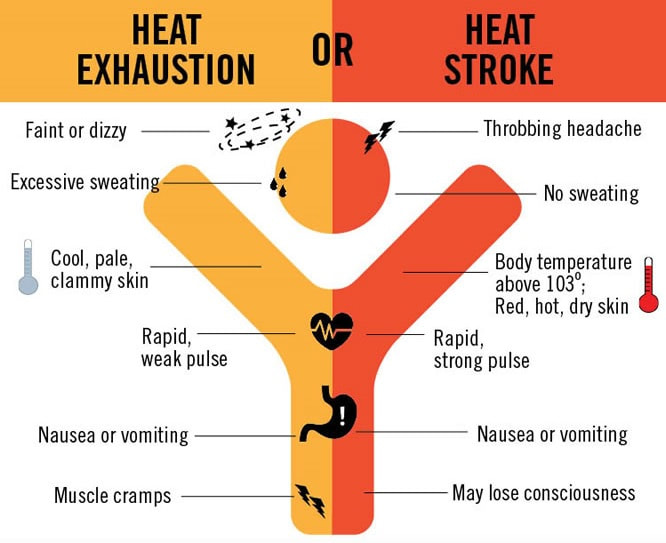
Heat Exhaustion and Heat Stroke, what’s the difference?
Heat Exhaustion is the body’s response to dehydration, most commonly caused by working or exercising in hot conditions. It can usually be treated by a First Aider, but if left untreated it can rapidly develop into life threatening Heat Stroke(in which case call for an ambulance immediately).
Heat Stroke is when the temperature control in the brain fails, the body is unable to cool down and the causalities core temperature can reach very dangerous levels within 10 to 15 minutes. This can be caused by prolonged exposure to high temperatures or fevers.
Recognising Heat Exhaustion
  • Pale, sweaty skin.
  • Feeling sick, loss of appetite or vomiting.
  • Fast shallow breathing and a fast weak pulse.
  • Cramps in the abdomen, arms or legs.
  • Headache, dizziness and confusion.
Treating Heat Exhaustion
  • Take the casualty to a cool place.
  • Remove excessive clothing, lie them down and raise their legs.
  • Give them plenty of water (and/or isotonic drinks) to re-hydrate them.
  • Get some medical advice by calling 111 even if the casualty recovers quickly.
  • If they start to become less responsive call 999, role the casualty on to their side (the recovery position) and monitor their breathing.
  • If they show signs of Heat Stroke treat as shown below.
Recognising Heat Stroke
  • Flushed, hot, dry skin but not sweating.
  • Throbbing headache.
  • Dizziness, fainting, confusion or restlessness.
  • Feeling sick or being sick.
  • Possibility of loss of consciousness or seizures.
Treating Heat Stroke
  • Move the casualty to a cool place.
  • Call 999 for an ambulance.
  • Cool the casualty rapidly however you can. For example,
    • Remove outer clothing and wrap in cold wet sheet, keeping it cold and wet until the casualties temperature falls to a normal level.
    • Sponging the casualty with cool water.
    • Fanning the casualty.
    • If they are conscious enough to do so placing them in a cool shower.
    • Showering the casualty with cool water from a garden hose.
0 Comments

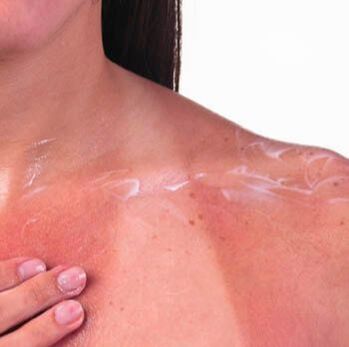
First Aid for Sunburn

29/6/2019

1 Comment

 
Picture
Causes
Ultraviolet rays from the sun, sun lamps and on rare occasions certain types of radiation.
Signs and Symptoms
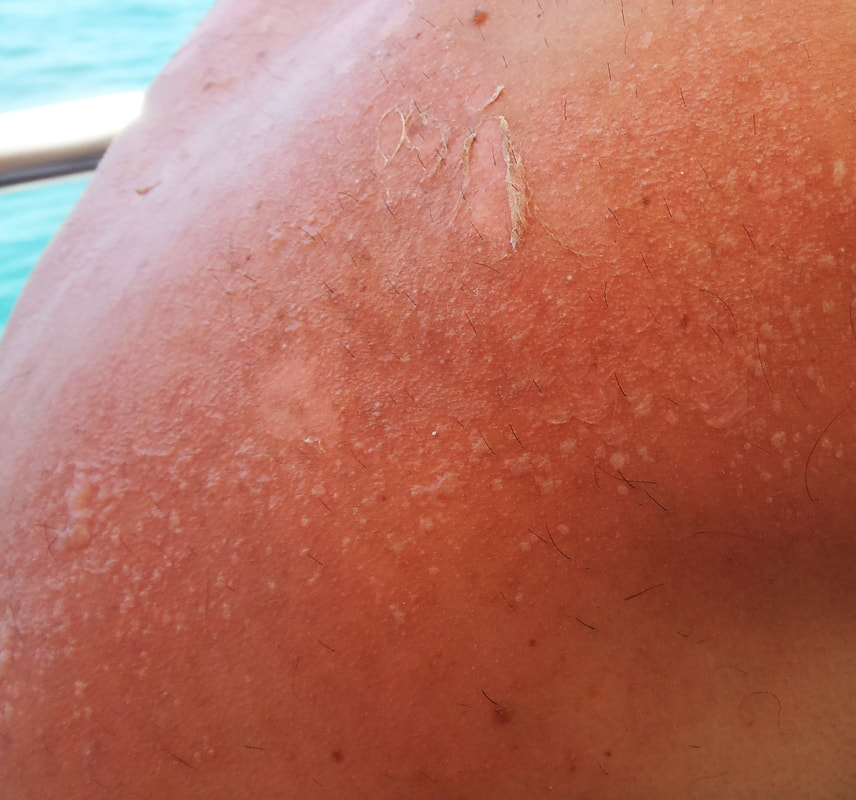
Reddening of the skin, pain in the associated area and in cases of severe sunburn blistering of the skin.
Treatment
  • Cooling the skin with a tepid shower/bath or with towels soaked in cold water for no more than ten minutes. This cooling process can be repeated if it is comforting for the casualty, but for no more than ten minutes at a time.
  • Ensure the casualty keeps drinking water, particularly if they are a child as dehydration can quickly lead to heat exhaustion.*
  • Keep the casualty out of direct sunlight until the skin heals. Bear in mind bodies of water such as swimming pools and the sea can powerfully reflect the sun’s rays.
  • Discourage the casualty from picking, peeling or scratching the sun burned area.
  • In cases of mild sunburn (where there is no blistering), after the casualties skin has completely cooled down, you may apply chamomile lotion, after-sun or aloe vera gel. These can comfort, reduce swelling and promote healing.
  • In cases of severe sunburn (where there is blistering) do not apply any lotions to the blistered area, do not burst the blisters and seek medical advice if concerned.
*Heat exhaustion can come on suddenly following exposure to the sun, the casualty may have a raised temperature, feel sick, dizzy, experience a headache or stomach ache and could even collapse or faint.
Severe sunburn with blistering and peeling skin.
Picture
1 Comment

    Author

    Steve Celli is the Senior Tutor at Castle Hill Training, don't be fooled by his youthful good looks he has decades of experience in training.

    Picture

    Archives

    June 2024
    February 2023
    June 2020
    May 2020
    July 2019
    June 2019
    August 2018
    February 2018
    January 2018
    December 2017

    Categories

    All

    RSS Feed

Proudly powered by Weebly
  • Home
  • Courses
    • First Aid >
      • 1 Day Emergency First Aid at Work Training Course in Barnsley
      • 3 Day First Aid at Work Training Course in Barnsley
      • Basic Life Support
    • Fire Warden
    • Evacuation Chair Training
    • Care Home Training >
      • Manual Handling Training for Care Home Staff
      • Infection Prevention and Control
      • Medication Awareness
      • Safeguarding of Vulnerable Adults
      • Dementia Awareness
      • Food Safety Training
      • First Aid for Care
      • Manual Handling Instructor Course
    • Moving and Handling Training
    • Health and Safety Training >
      • Health and Safety Training Courses in Barnsley
      • Manual Handling Training Course in Barnsley
      • Asbestos Awareness Training Courses in Barnsley
      • Ladder Safety Training Courses in Barnsley
    • Moving and Handling Instructor Course
  • News
  • Contact